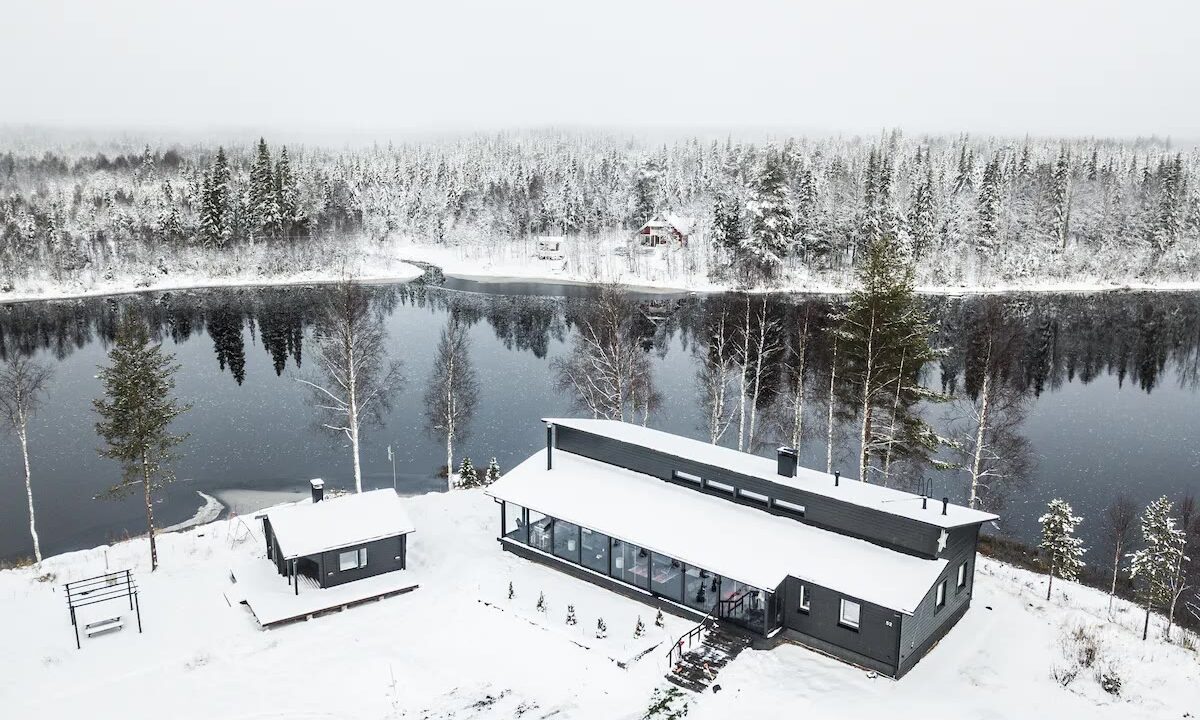
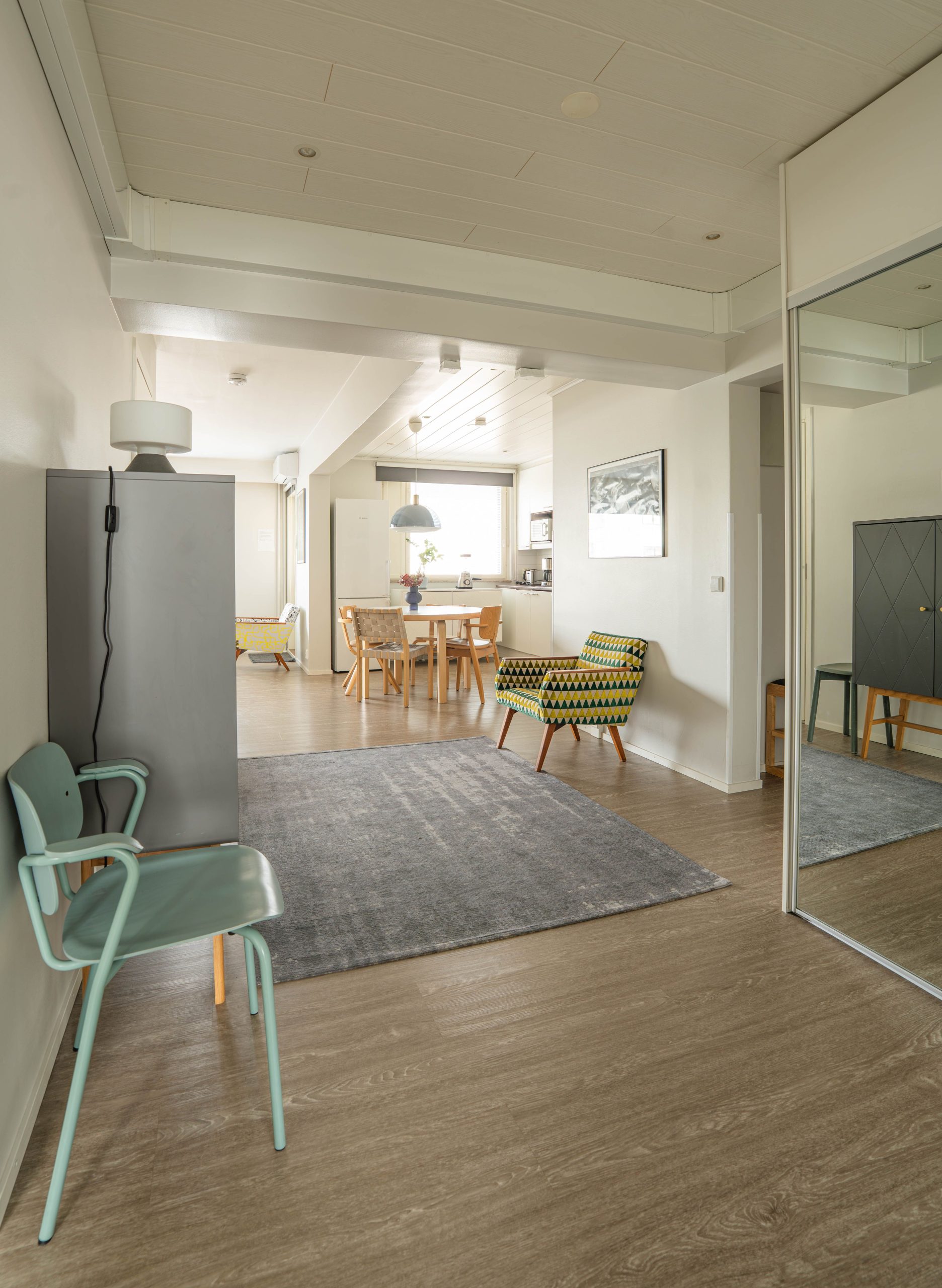
A premium Lapland villa in 2026 should offer step-free entrances, wide doorways for wheelchair access, roll-in shower facilities, and clearly lit pathways between indoor and outdoor spaces. These features are no longer optional extras for discerning travelers — they are the baseline expectation for any accommodation that genuinely claims to welcome every guest. The questions below unpack exactly what accessible luxury looks like in a remote arctic setting, from indoor mobility design to bespoke activity arrangements.
Which accessibility features matter most in a remote arctic setting?
In a remote arctic setting, the most critical accessibility features are reliable step-free access between all living areas, a dedicated accessible parking space with a power socket for car preheating, and clearly marked pathways that remain safe and navigable in winter conditions. Because remote Lapland properties sit far from urban infrastructure, the villa itself must compensate for the absence of nearby support services.
Unlike city accommodations, a secluded arctic villa cannot rely on a nearby pharmacy, medical center, or accessible transport network. This places the entire responsibility for accessibility on the property and its host. Premium accessible accommodation in Lapland must therefore be self-sufficient: emergency lighting, backup heating, and clear communication between guests and a dedicated host contact are all part of responsible accessibility planning.
The remoteness that makes Lapland so extraordinary — the pristine silence, the undisturbed snowscapes, the absence of crowds — should be available to every guest regardless of mobility or sensory need. Accessibility in this context is not a compromise of luxury. It is an extension of it.
What mobility accommodations should a premium Lapland villa include indoors?
A premium Lapland villa should include wide doorways of at least 90 centimeters, a step-free floor plan throughout all main living areas, a roll-in or walk-in shower with grab rails, a ground-floor bedroom option, and lever-style door handles and taps. These indoor mobility accommodations form the structural foundation of an accessible luxury villa in Finland.
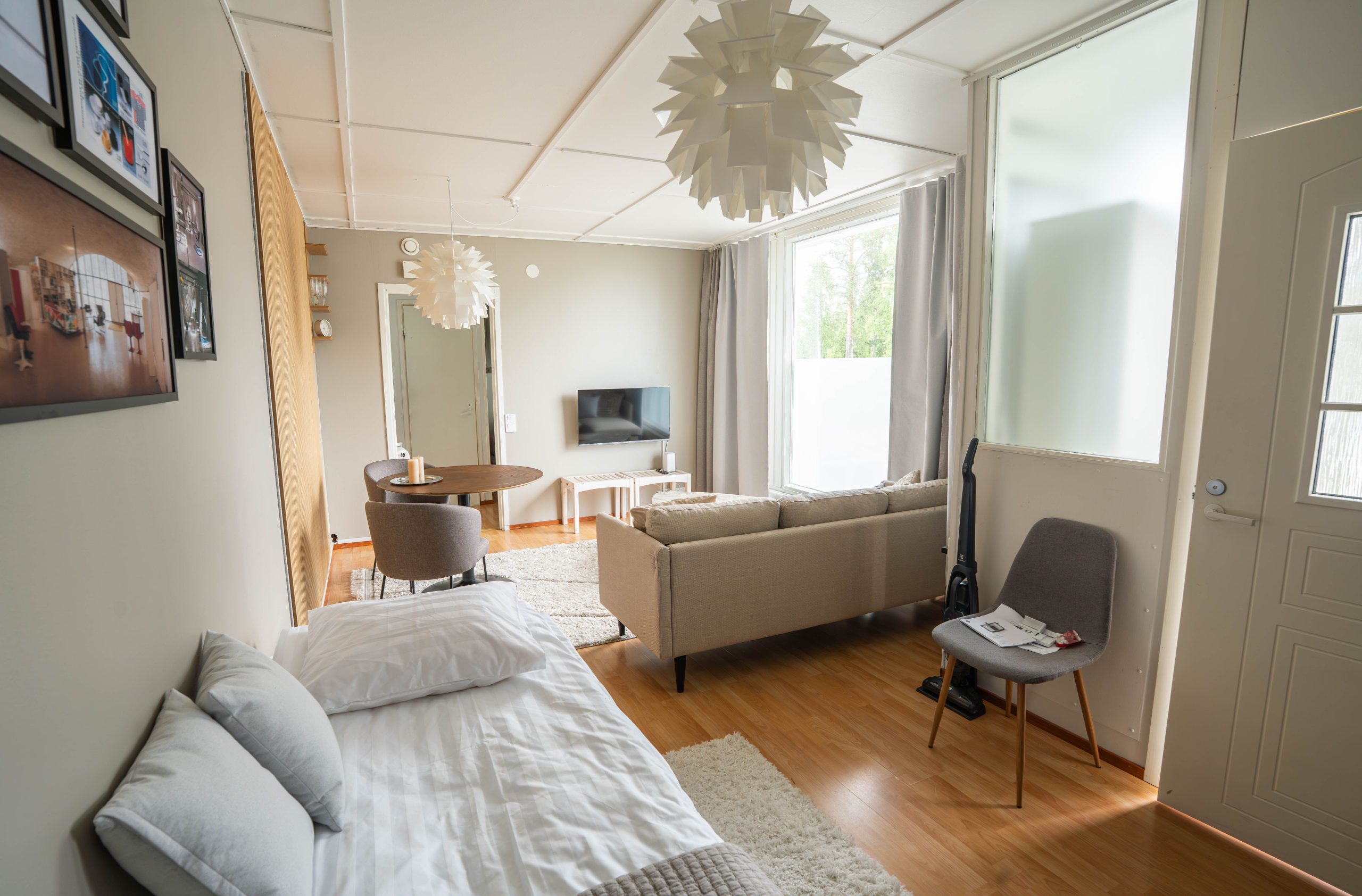
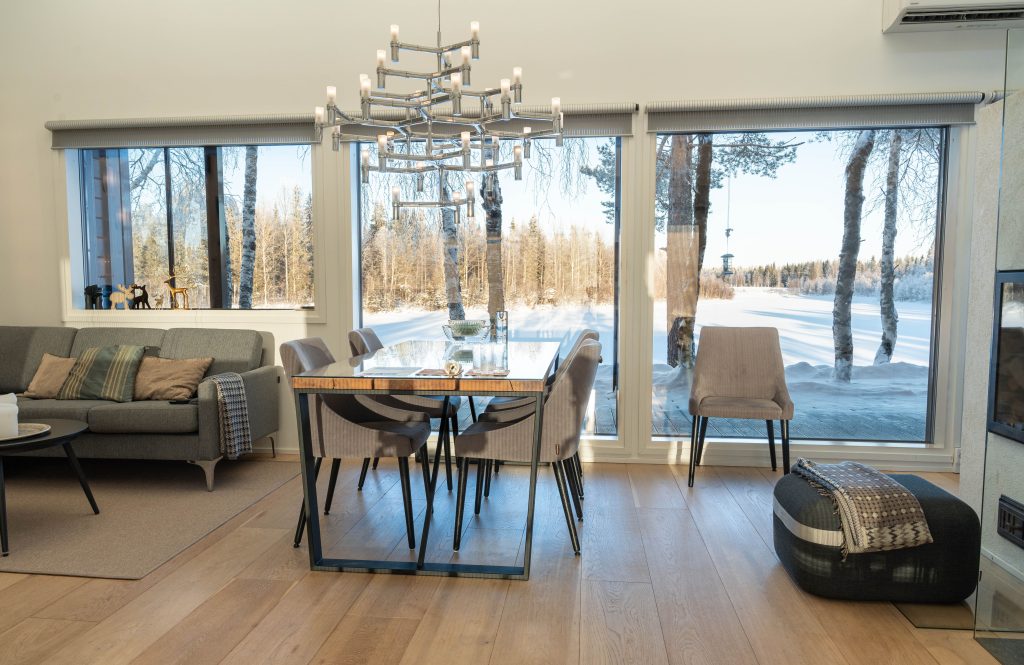
Beyond the structural basics, the interior design itself should support ease of movement. Furniture arrangements should allow clear turning space for wheelchair users, and rugs or floor coverings should be secured to prevent slipping. In a well-designed accessible villa, these features integrate seamlessly into the aesthetic rather than appearing as afterthoughts.
Bathroom design deserves particular attention. A roll-in shower with a fold-down seat, an adjustable showerhead, and non-slip flooring is the standard for wheelchair accessible accommodation in Lapland. A raised toilet seat and a vanity area with knee clearance beneath it further support independent use. When these elements are built into the villa’s original design rather than retrofitted, they carry the same warmth and quality as the rest of the space.
Private saunas, a beloved feature of Finnish villa stays, should also be considered in accessibility planning. An accessible sauna entrance, lower bench options, and handrails allow guests with mobility needs to enjoy this deeply cultural experience without exclusion.
How should a luxury arctic villa handle outdoor and winter accessibility?
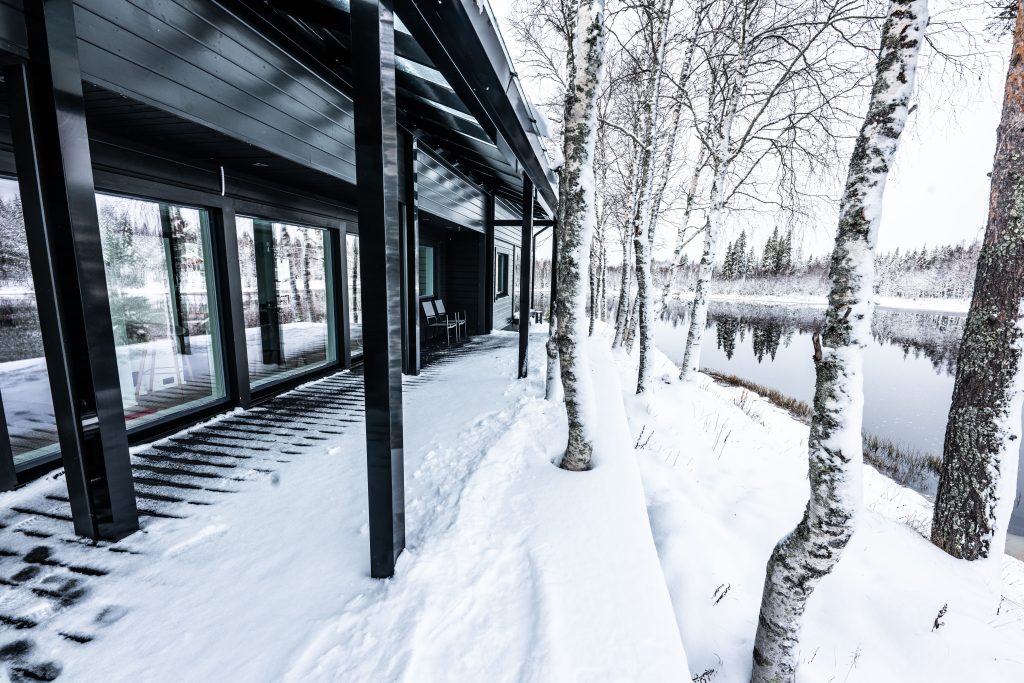
A luxury arctic villa should handle outdoor and winter accessibility through heated pathways or regularly cleared snow routes between the entrance, parking area, and key outdoor spaces, combined with non-slip surface treatments, handrails on any inclines, and adequate exterior lighting throughout the polar night. Winter conditions in Lapland create unique accessibility challenges that require active, daily management rather than passive design alone.
Snow and ice are the defining outdoor challenge. Even a perfectly flat pathway becomes a significant barrier when covered in packed snow or black ice. Premium accessible accommodation in Rovaniemi and the wider Lapland region should address this through a combination of heated paving where feasible, consistent snow clearing, and the use of anti-slip grit or mats at all entry points.
Outdoor terraces and seating areas should be reachable without steps. Where a terrace is elevated, a ramped access route with a firm, grippable surface is the appropriate solution. Lighting along these routes is essential during the long arctic nights of winter, when darkness falls in early afternoon and guests need to move safely between the villa and outdoor areas.
Parking is a practical priority that is often overlooked. A dedicated accessible parking bay positioned close to the entrance, with sufficient width for a vehicle ramp or side transfer, and a power socket for engine preheating in sub-zero temperatures, reflects a genuine understanding of what winter accessibility requires in this part of Finland.
What sensory and cognitive accessibility features should guests expect?
Guests with sensory or cognitive accessibility needs should expect clear visual wayfinding throughout the property, adjustable lighting levels in all rooms, low-stimulus quiet spaces, and a welcome pack or briefing that explains the layout and emergency procedures in plain, accessible language. These features support guests who experience the world differently, including those with visual impairments, hearing loss, autism spectrum conditions, or cognitive differences.
Visual accessibility begins with contrast. Door frames, step edges, and light switches should contrast clearly with surrounding surfaces so that guests with low vision can navigate confidently. Tactile indicators at key transition points, such as the entrance to a sauna or the edge of a terrace, add a further layer of safety without disrupting the villa’s design language.
For guests with hearing impairments, visual alert systems for doorbells, smoke alarms, and other notifications replace or supplement auditory signals. These are particularly important in a remote setting where guests may be the only occupants and cannot rely on others to alert them.
Cognitive accessibility is best supported through simplicity and consistency. A clear floor plan, intuitive appliance controls, and a straightforward written guide to the property reduce the cognitive load of arriving somewhere unfamiliar. In a luxury setting, this information can be presented beautifully — a well-designed welcome book, for example, serves both aesthetic and practical purposes.
Should accessible villa bookings include tailored service arrangements?
Yes, accessible villa bookings should include tailored service arrangements as a standard part of the booking process, not an add-on. This means a pre-arrival conversation to understand each guest’s specific needs, arrangements for accessible transfers from the airport, and the option to request services such as a private chauffeur or in-villa support that remove logistical barriers before they arise.
For guests with accessibility needs, the friction of travel is often greatest in the transitions: the journey from the airport, the arrival at the property, the navigation of unfamiliar spaces. A bespoke approach that anticipates these moments and prepares solutions in advance is what separates premium accessible accommodation from a standard property that happens to have a wide doorway.
A private chauffeur service, for example, is not simply a comfort feature in this context. For a wheelchair user or a guest with limited stamina, it is the difference between an arrival that feels seamless and one that begins with exhaustion. Similarly, a private chef arrangement removes the need to navigate supermarkets or unfamiliar kitchen equipment, allowing guests to focus entirely on the experience of being in Lapland.
Arctic Dreams House builds this kind of tailored approach into every stay by design. Guests are treated as individuals from the first point of contact, and service arrangements are shaped around personal needs rather than standardized packages. Those planning an accessible stay in Lapland are welcome to discuss tailored arrangements directly with the team before booking.
Which Lapland activities can be adapted for guests with accessibility needs?
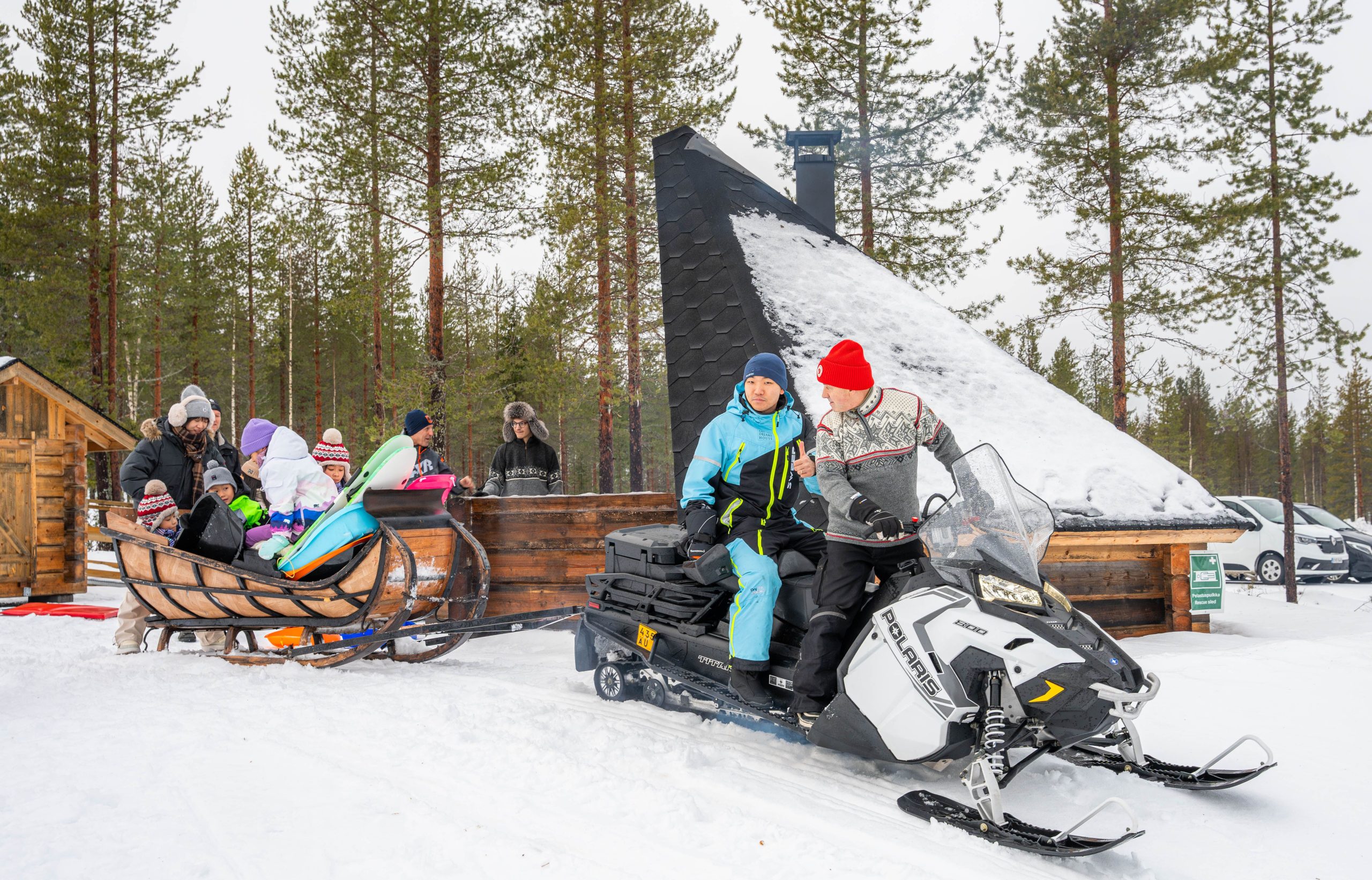
Many of Lapland’s most iconic activities can be adapted for guests with accessibility needs, including Northern Lights safaris by private vehicle, reindeer farm visits with accessible pathways, snowmobile experiences designed for seated or supported participation, and guided Ranua Zoo visits where terrain allows for mobility aid use. The key is working with a provider who arranges these experiences privately and adapts them to each guest rather than offering fixed group formats.
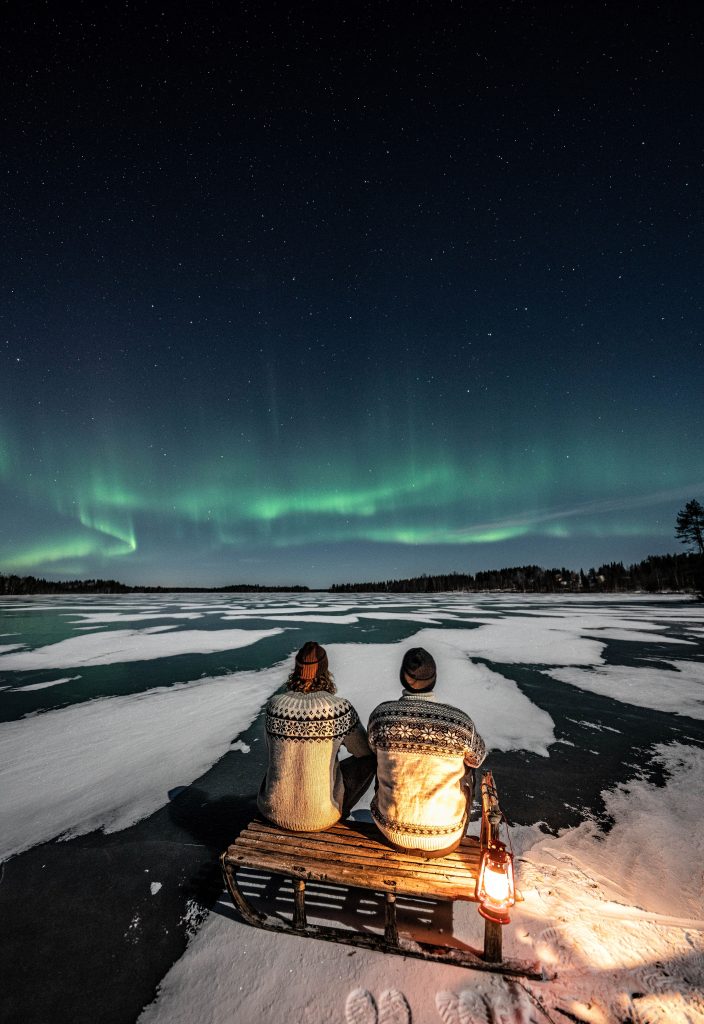
Northern Lights hunting is one of the most accessible arctic experiences by nature. It primarily involves traveling by vehicle to a dark, open location and waiting — an activity that requires no physical exertion and can be fully enjoyed from a warm, comfortable seat. A private vehicle arrangement makes this experience available to virtually every guest regardless of mobility level.
Reindeer sleigh rides can often be adapted for guests who need additional support, with guides experienced in assisting passengers into and out of the sleigh. Husky experiences, where guests ride in a sled rather than run alongside the dogs, similarly require minimal physical effort from the guest. The emotional and sensory richness of these experiences is entirely intact regardless of how a guest participates.
Meeting Santa privately is another experience that translates beautifully for guests with accessibility needs. A fully private, unhurried encounter with no crowds, no queues, and no time pressure creates a calm, sensory-friendly environment that is as meaningful for guests with cognitive or sensory differences as it is for any other visitor. Details about private arctic activities and how they can be tailored are available directly from the Arctic Dreams House team.
Accessibility in Lapland is ultimately a question of intention. When a provider is genuinely committed to crafting each stay around the individual, the extraordinary landscapes and experiences of this region become available to every guest who dreams of them. The right villa, the right service team, and the right activity arrangements make the difference between a journey that is possible and one that is unforgettable.