Dressing children for Lapland’s winter outdoors is one of the most practical challenges families face when planning a trip to northern Finland. Temperatures in Rovaniemi and the surrounding wilderness can drop well below freezing, and young bodies lose heat faster than adults. Get the preparation right, and your children will thrive outside for hours. Get it wrong, and even the most magical reindeer sleigh ride can turn into a miserable, shortened experience.
This guide walks you through five clear steps to keep children warm, comfortable, and safe during outdoor activities in Lapland. Whether you are joining a Northern Lights hunting excursion or exploring the snowy forests around Rovaniemi, these steps will help you prepare with confidence. Arctic Dreams House also rents winter clothing for guests, so if you are travelling light, you do not need to pack an entire Arctic wardrobe from home.
Gear Up with the Right Layering System for Kids
The foundation of keeping children warm in Lapland is a properly built layering system. Unlike adults, children move unpredictably between bursts of high activity and standing still, which means their clothing needs to manage both heat buildup and rapid heat loss. Three distinct layers, each with a specific function, are the standard approach used by Lapland guides and outdoor professionals.
- Base layer (moisture-wicking): Choose a merino wool or high-quality synthetic thermal underlayer that sits directly against the skin. Merino wool is particularly effective because it regulates temperature naturally and does not feel cold when damp. Avoid cotton entirely at this layer, it retains moisture and chills quickly.
- Mid layer (insulating): A fleece jacket or a down-filled vest traps body heat and provides the core insulation. Fleece is a reliable choice because it retains warmth even if it gets slightly damp.
- Outer layer (windproof and waterproof): A well-fitted snowsuit or a separate ski jacket and trousers that are both windproof and waterproof. Look for taped seams and a high collar to block wind from reaching the neck.
Once all three layers are on, check that the outer suit is not so tight that it compresses the mid and base layers, compression reduces insulation by eliminating the warm air pockets between fibres. A child dressed in a well-functioning three-layer system should feel warm but not bulky or restricted in movement.
Protect the Extremities: Hands, Feet, and Head
Up to 40 percent of body heat escapes through the head, and cold extremities are the first sign that a child is losing warmth faster than they can generate it. Protecting hands, feet, and the head is not secondary to the layering system, it is equally critical, and in many cases the first place children complain of discomfort.
Hands
Use a liner glove underneath a waterproof mitten rather than a single glove. Mittens are significantly warmer than fingered gloves because fingers share body heat when grouped together. Make sure the mitten cuff extends over the jacket sleeve to eliminate any gap where cold air can enter.
Feet
Start with a thin wool sock followed by a thicker wool or thermal sock. Place these inside winter boots rated to at least minus 30 degrees Celsius. Ensure the boots are not too tight, constricted feet lose circulation and become cold faster. Waterproof boots with a rubber sole are essential if children will be walking through snow.
Head and neck
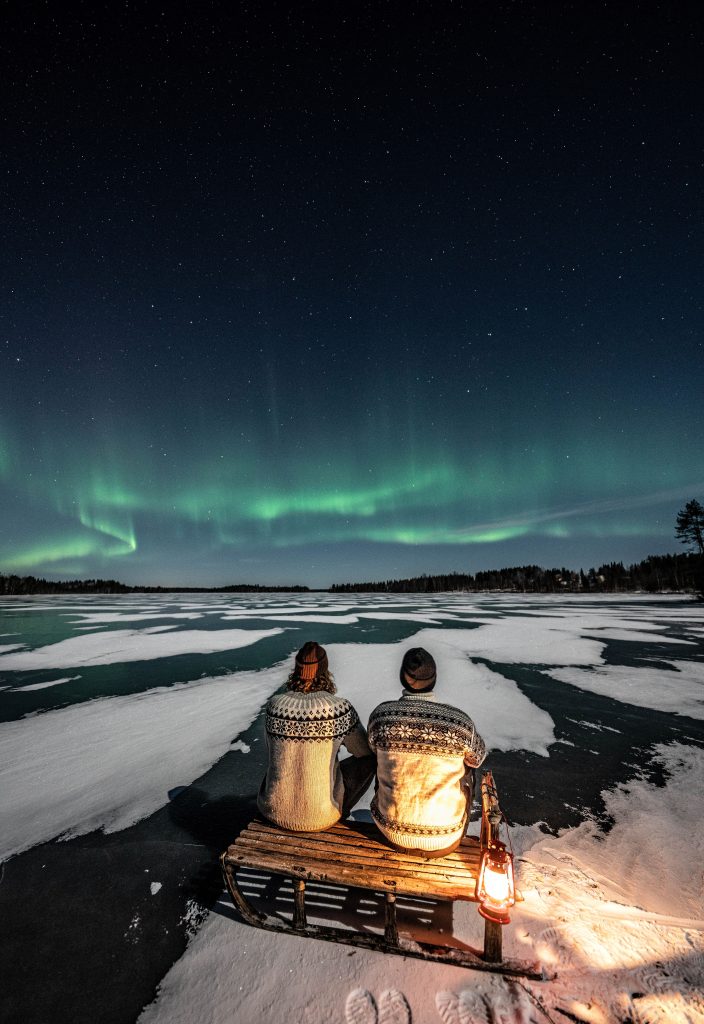
A well-fitted wool or fleece hat that covers the ears is the minimum. In very cold conditions or during stationary activities like Northern Lights watching, add a balaclava underneath the hat. A neck gaiter or snood provides additional protection and can be pulled up over the lower face when temperatures drop sharply.
Check the extremities regularly throughout the day. If a child’s fingers or toes feel numb or look pale, move them indoors immediately and warm the affected area gently, never rub, as this can cause tissue damage in extreme cold.
Adjust Layers Based on Activity Level and Temperature
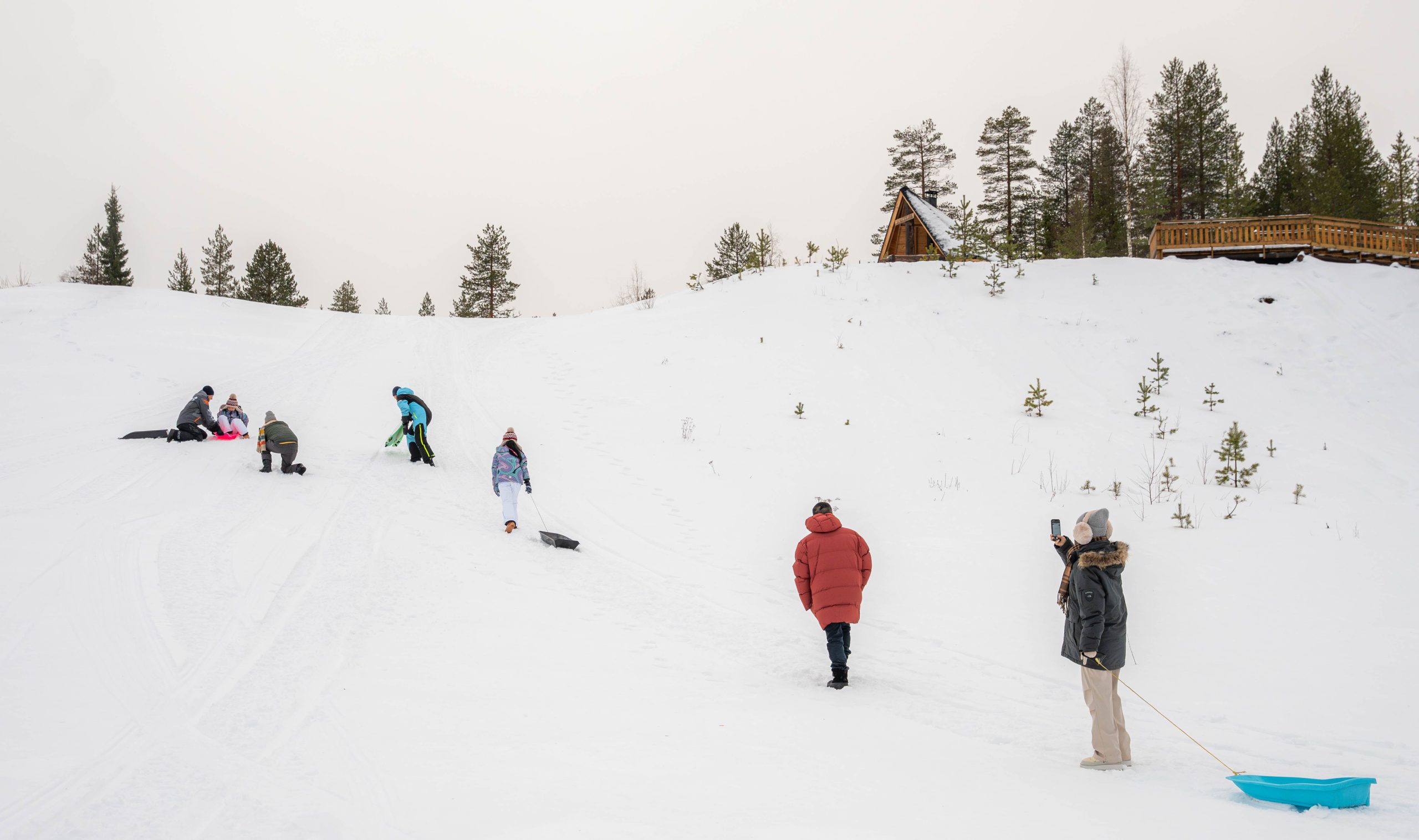
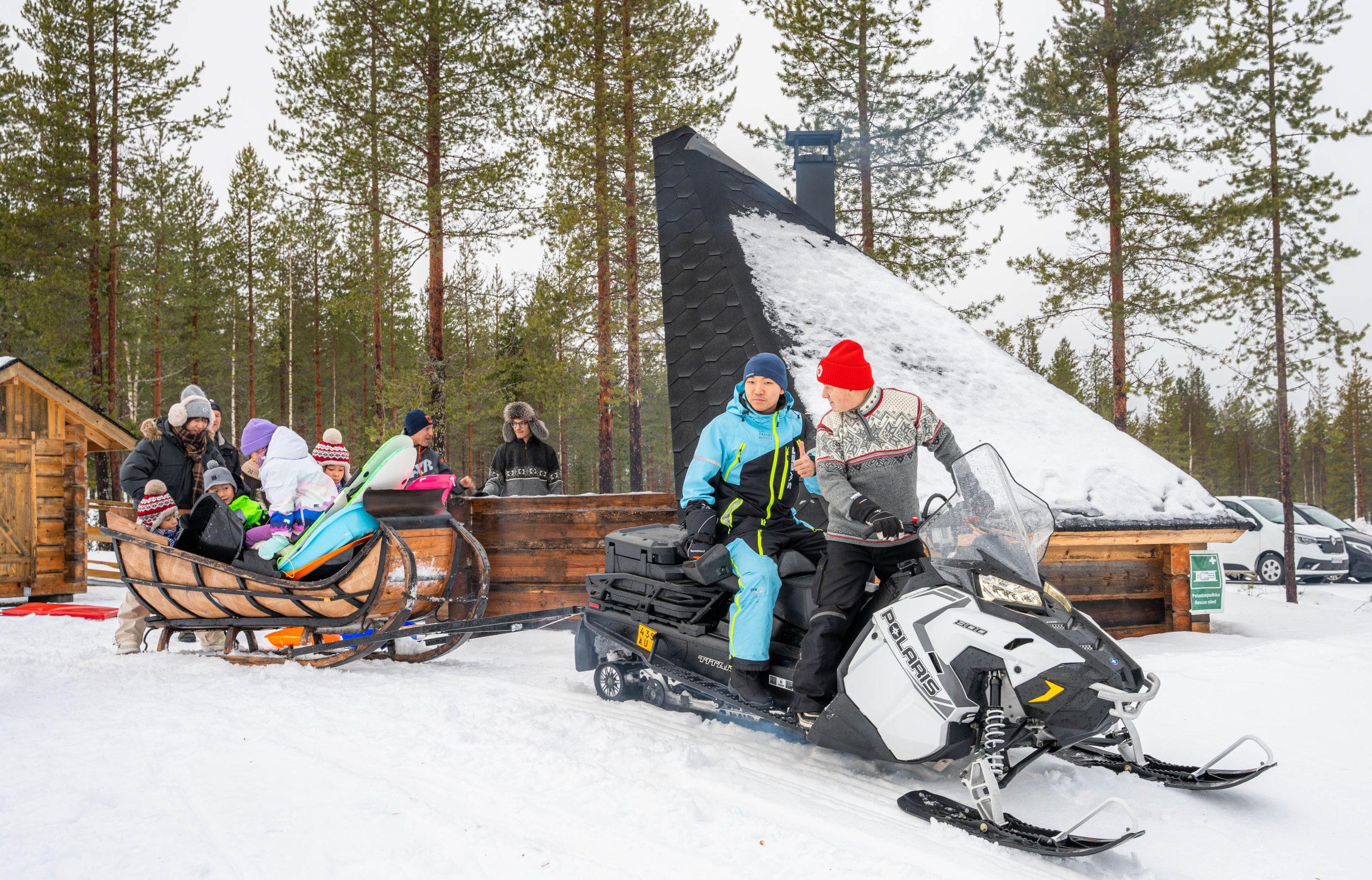
One of the most common mistakes parents make is dressing children for the coldest moment of the day and leaving those layers on throughout. A child who is warm enough while waiting for a husky team to be harnessed will quickly overheat once the sleigh is moving and they begin to generate body heat. Sweat-soaked clothing loses its insulating properties and creates a rapid chill the moment activity stops.
Build the habit of adjusting layers proactively, not reactively. Before a high-activity segment such as snowshoeing or a snowmobile safari, remove the mid layer if temperatures are above minus 10 degrees Celsius. Before a stationary period such as a Northern Lights vigil or a reindeer farm visit, add layers back on before the child feels cold rather than after. A useful rule of thumb: dress the child so that they feel slightly cool at the start of an activity. Their body heat will bring them to the right temperature within the first few minutes of movement.
- Above minus 5°C with high activity: base layer and outer shell may be sufficient
- Minus 10 to minus 20°C with moderate activity: full three-layer system
- Below minus 20°C or stationary periods: full three-layer system plus extra insulating accessories for extremities
If you are unsure about the day’s temperature range, ask your guide or the team at Arctic Dreams House before heading out. Local knowledge of how conditions change throughout the day is invaluable, particularly when planning activities like Northern Lights hunting, which typically takes place in the coldest hours of the night.
Keep Children Fueled and Hydrated Throughout the Day
The body generates heat by burning energy, and children burn through energy reserves quickly in cold environments. A child who has not eaten or drunk enough will feel cold faster, tire more easily, and become irritable, all of which cut outdoor time short. Nutrition and hydration are direct contributors to warmth, not just general wellbeing.
Bring high-energy snacks that are easy to eat outdoors with gloves on. Warm food and drinks make a significant difference both physically and psychologically. A thermos of warm berry juice, hot chocolate, or soup provides immediate warmth from the inside and gives children something to look forward to during breaks.
- Pack calorie-dense snacks: nuts, dried fruit, cheese, and dark chocolate all work well in cold conditions
- Bring a thermos of warm liquid for every two to three hours outdoors
- Encourage children to drink even if they do not feel thirsty, cold air is dry and dehydration is easy to miss in winter
- Avoid sugary drinks that cause rapid energy spikes followed by crashes
Cold air also suppresses the sensation of thirst, which means children often do not ask for water even when they need it. Make hydration a scheduled part of the day rather than something that happens only when requested.
Plan Warm-Up Breaks into the Outdoor Schedule
Even with perfect layering and good nutrition, children need periodic indoor breaks during extended time outdoors in Lapland. Building these breaks into the schedule intentionally, rather than waiting for a child to become visibly cold or distressed, keeps the day enjoyable and prevents the kind of deep chill that takes a long time to recover from.
Aim for a warm-up break every 60 to 90 minutes during full-day outdoor activities. Use a heated cabin, a vehicle, or an indoor space to allow the body to recover fully before heading back outside. During these breaks, check the extremities, remove damp layers if needed, offer warm food or drink, and give children time to rest without pressure to rush back out.
- Identify warm-up locations on your route before the activity begins, ask your guide where the nearest heated shelter is at all times.
- Set a timer or agree on a schedule with your guide so breaks happen consistently, not only when someone complains of cold.
- Use breaks to reassess layering, what worked at the start of the day may need adjustment as temperatures change or activity levels shift.
- Allow children to remove outer boots and gloves briefly indoors so circulation can recover in the extremities.
Structuring the day this way also makes the outdoor experience more sustainable. Children who know a warm break is coming are more willing to stay positive and engaged outside. A well-planned rhythm of activity and recovery transforms a potentially exhausting day into one your family will remember with genuine warmth.
When you stay at The Luxury Downtown Rovaniemi, Arctic Dreams House’s premium apartment in the heart of the city, you have a comfortable, spacious base to return to after a full day in the Lapland outdoors. The apartment accommodates up to ten guests and provides everything a family needs to rest, recharge, and prepare for the next adventure. From there, the full range of Arctic Dreams House activities is within easy reach, including snowshoeing, husky rides, sauna experiences, and the unforgettable Private Santa meeting at privatesanta.fi. Plan ahead, dress your children well, and Lapland will reward your family with memories that last a lifetime.