Dressing children for a Lapland winter is one of the most practical challenges families face when planning a trip to northern Finland. Temperatures in Rovaniemi can drop well below freezing, and young children lose body heat much faster than adults. Getting the layering system right means your children stay warm, dry, and happy outdoors, so the whole family can fully enjoy the arctic experience rather than cutting activities short.
This guide walks through exactly how to dress children for winter conditions in Lapland, from what to pack before you travel to how to adjust clothing on the go. If you are staying at The Luxury Downtown Rovaniemi or planning activities such as Northern Lights hunting, this practical checklist will help you prepare your children for every moment spent under the arctic sky.
What to Pack Before Dressing for Lapland Winters
Before thinking about how to dress your children, you need to make sure you have the right clothing items in your luggage. Lapland winters are not the same as a cold day in most European or North American cities. Temperatures regularly sit between -10°C and -25°C, and wind chill can make exposed skin feel the effects within minutes. The good news is that the layering system used in Scandinavia is straightforward once you know which items to bring.
If packing full winter gear for children feels overwhelming, Arctic Dreams House offers winter clothing rentals, so you do not need to travel with bulky suits and boots. This is especially useful for families flying in with limited luggage allowance. That said, here is the core checklist of what to have ready before you begin layering:
- Merino wool or thermal base layer set (top and bottoms)
- Mid-layer fleece or wool sweater and trousers
- Insulated, waterproof outer suit (a one-piece snowsuit is ideal for younger children)
- Waterproof and insulated winter boots rated to at least -30°C
- Wool or thermal socks (two pairs per day)
- Waterproof mittens with a wool liner glove underneath
- A warm hat that covers the ears, plus a balaclava or neck gaiter
- Thin wool or thermal inner socks
Once you have confirmed every item on this list, you are ready to begin the layering process. Missing even one element, particularly the base layer or proper boots, can compromise the entire system and leave your child cold within the first hour outdoors.
Layer Children’s Clothing from Skin Outward
The three-layer principle is the foundation of Scandinavian winter dressing, and it works just as effectively for children as it does for adults. Each layer serves a distinct purpose, and the order in which you dress your child matters. Start at the skin and work outward, never skipping a layer, even if the plan is to be outside for only a short time.
- Base layer (skin contact): Dress your child in a merino wool or synthetic thermal top and bottoms directly against the skin. Merino wool is the preferred choice because it regulates temperature, wicks moisture, and does not itch. Avoid cotton entirely, cotton absorbs sweat and holds it against the skin, which causes rapid cooling.
- Mid layer (insulation): Add a fleece jacket and fleece or wool trousers over the base layer. This layer traps warm air close to the body. For very young children or particularly cold days, a down gilet over the fleece adds extra core insulation without restricting arm movement.
- Outer layer (protection): The outermost layer must be both windproof and waterproof. A one-piece insulated snowsuit is the most practical option for children under eight, as it eliminates the gap between jacket and trousers where cold air enters. For older children, a separate insulated jacket and salopettes work well, provided they overlap securely at the waist.
After completing all three layers, check that the child can move freely, they should be able to bend their knees, raise their arms, and sit down without the layers pulling apart. If the outer suit feels very tight over the mid layer, size up. A slight looseness in the outer layer actually improves insulation by allowing a thin air gap.
Protect Extremities: Hands, Feet, and Head
In arctic conditions, heat loss through the hands, feet, and head is the most common cause of a child becoming dangerously cold. Children are particularly vulnerable because their extremities have less natural insulation and their circulation is still developing. Protecting these areas is not optional, it is the most critical part of winter dressing.
Hands
Use a two-glove system: a thin wool or thermal liner glove worn directly on the hand, with a waterproof, insulated mitten pulled over the top. Mittens are significantly warmer than fingered gloves because the fingers share heat. Attach mittens to the jacket sleeves with clips or cords so they are not lost when removed during snack breaks or indoor stops.
Feet
Start with a thin wool inner sock, then add a thicker wool outer sock on top. Boots must be rated to at least -30°C and should have enough room for both sock layers without squeezing the foot, tight boots restrict circulation and make feet colder. When trying boots on, do so with both sock layers in place.
Head and Neck
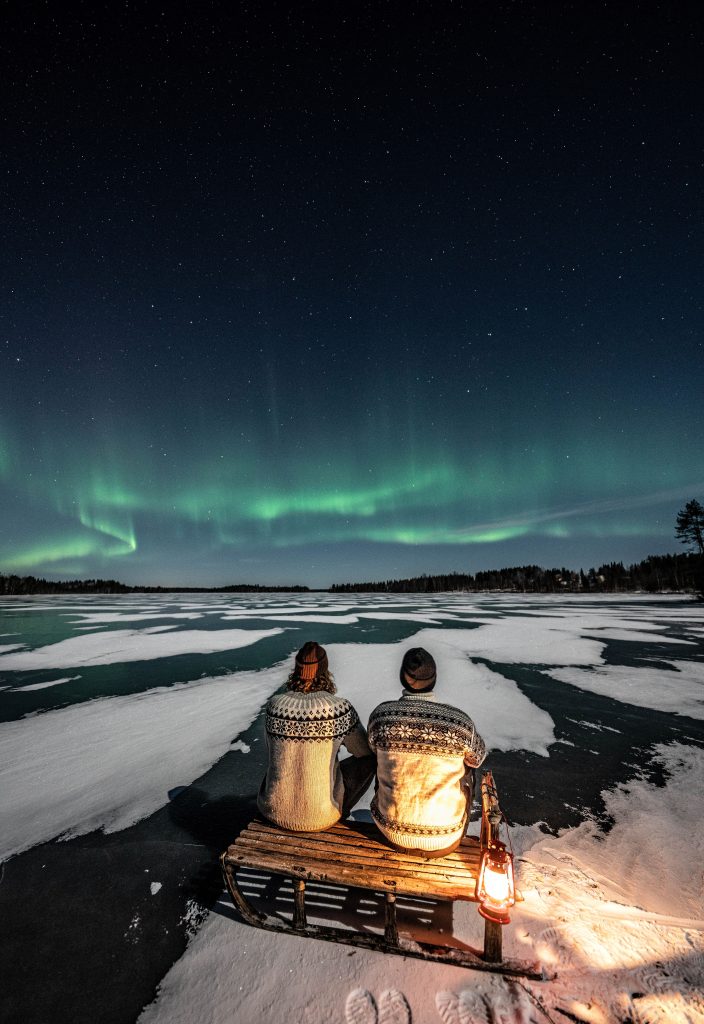
A warm hat that fully covers the ears is essential. For temperatures below -15°C, add a balaclava or neck gaiter that can be pulled up over the nose. Many snowsuits include an integrated hood, use it over the hat for maximum protection during activities like Northern Lights hunting, where the family may be standing still outdoors for extended periods.
After dressing the extremities, do a final check: press the back of your hand gently against your child’s neck and lower back. If these areas feel warm, the layering system is working correctly. Cold skin at the core is a sign that adjustments are needed before heading outside.
Adjust Layers for Different Activities and Temperatures
One of the most common mistakes parents make in Lapland is dressing children identically for every outing. A husky sleigh ride where the child sits still in a sled requires significantly more insulation than a snowshoeing session where the child is moving continuously. Adjusting layers based on activity level and temperature prevents both overheating and cold.
Use this simple framework to guide your decisions:
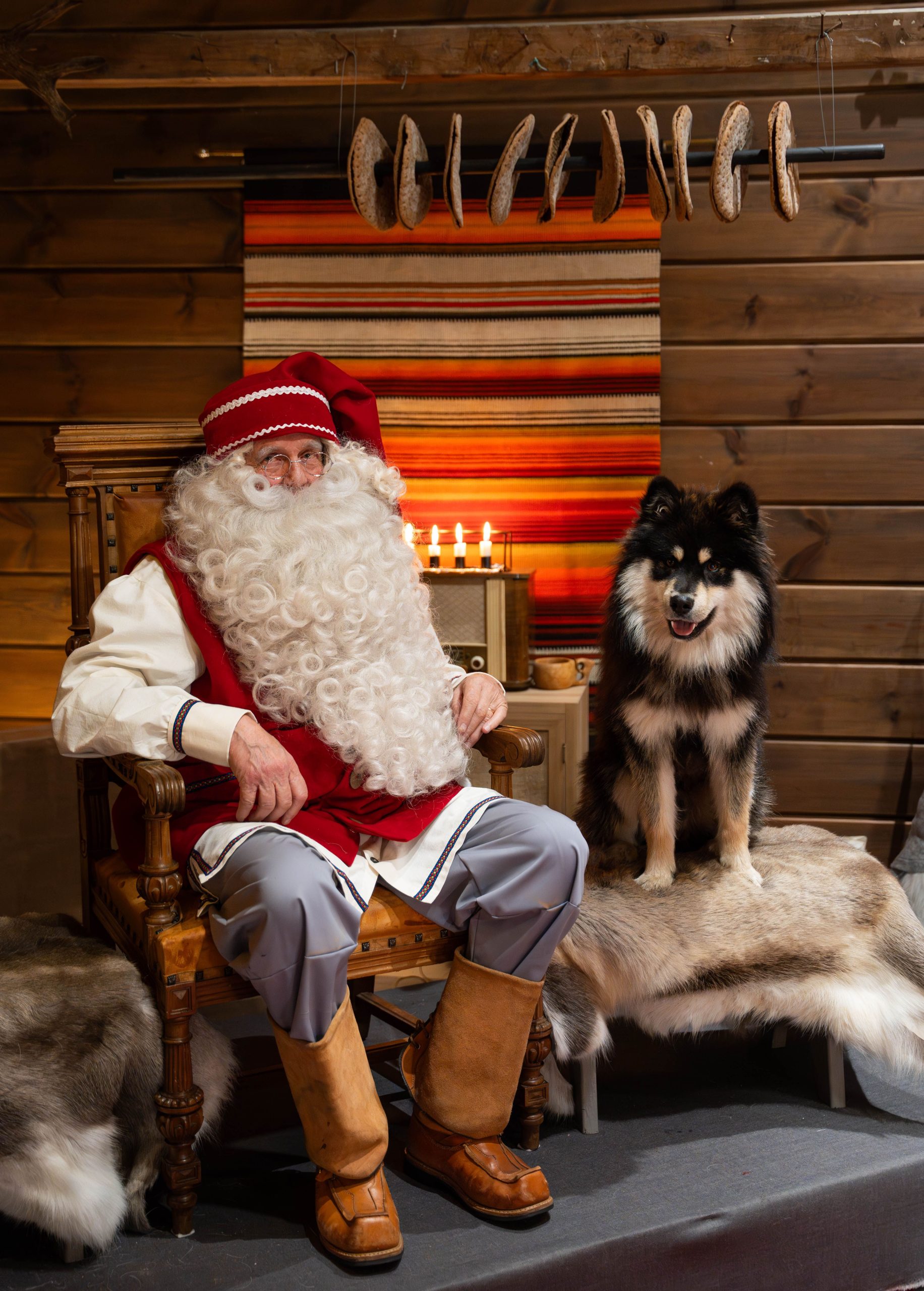
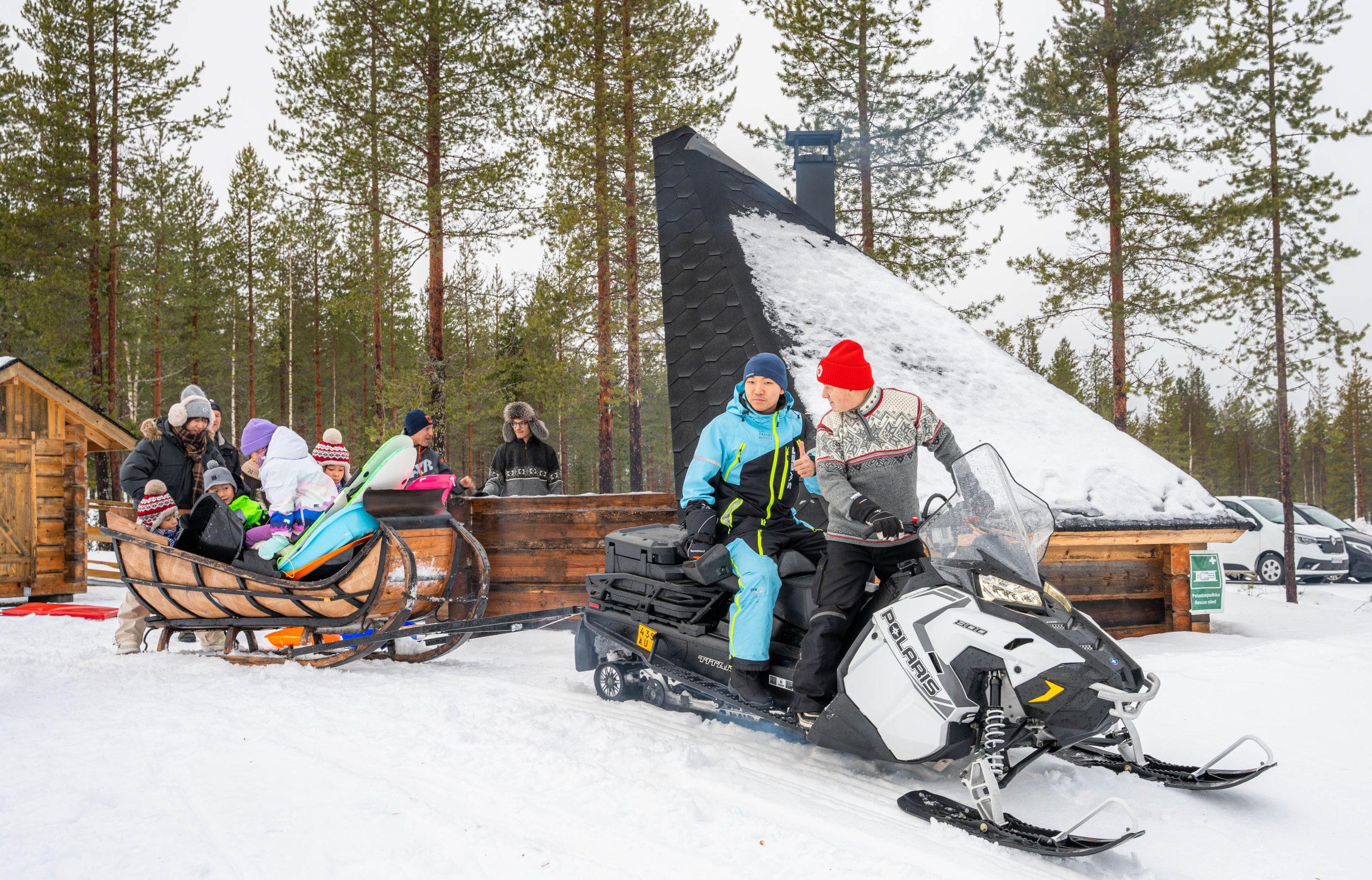
- Stationary or low-movement activities (watching Northern Lights, reindeer sleigh rides, visiting Private Santa): Keep all three layers on, add an extra mid layer if temperatures are below -20°C, and ensure the outer suit hood is up.
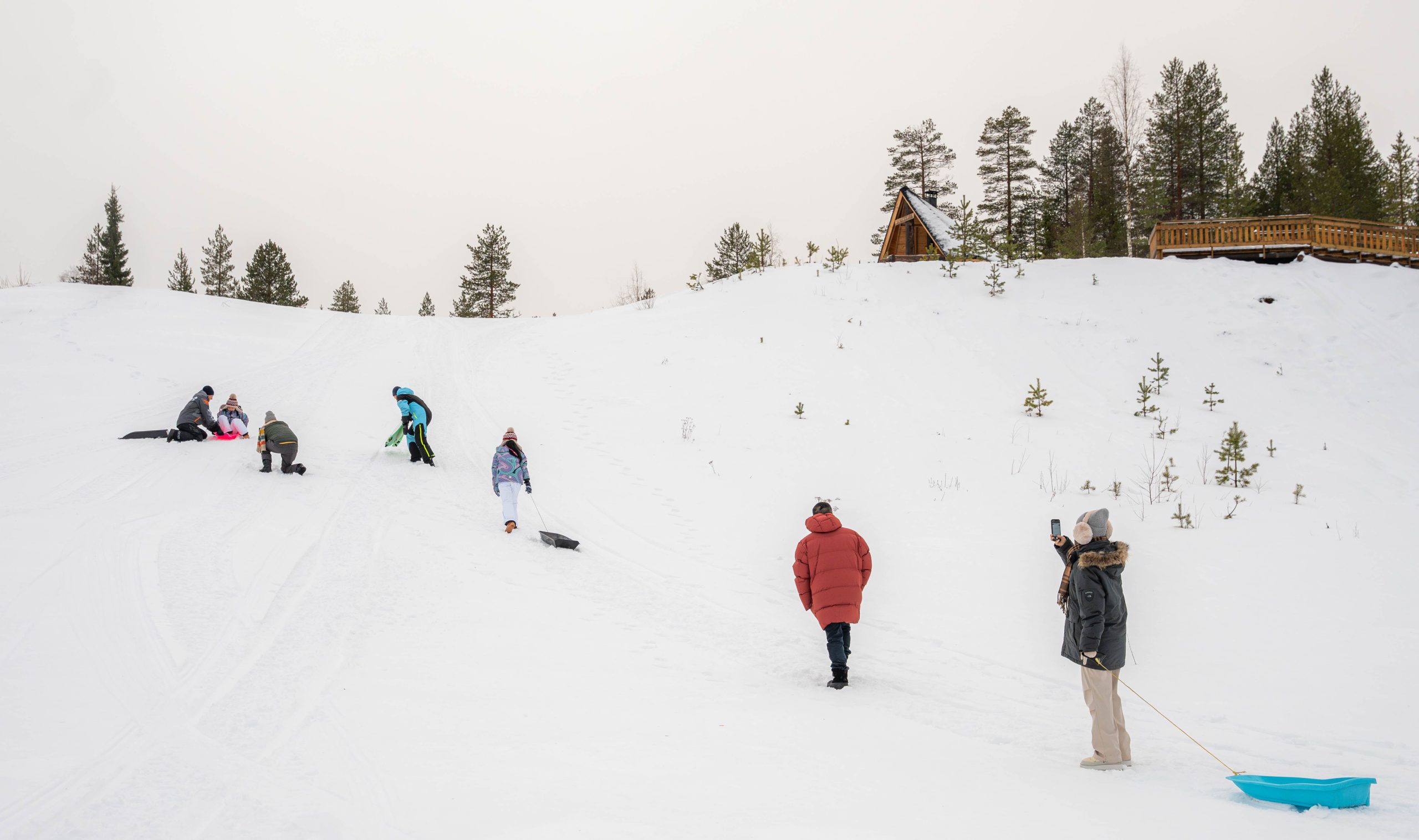
- Moderate activity (snowshoeing, short walks, building snowmen): Base layer and outer suit are usually sufficient. Remove the mid layer fleece if the child begins to sweat.
- High activity (active play, skiing): Start with just the base layer and outer suit. Pack the mid layer in a backpack and add it back immediately when the child stops moving.
Temperature also shifts significantly between morning and midday in Lapland, even in deep winter. Check the forecast before each outing and pack one extra mid layer in your bag as a buffer. It takes under two minutes to add or remove a fleece, and that small adjustment can make the difference between a child who stays outside happily and one who asks to go in after twenty minutes. Explore all available activities to plan your family’s itinerary and match clothing choices to each experience.
Keep Children Dry and Warm During Outdoor Stays
Moisture management is the final and often overlooked element of keeping children warm in Lapland. A child who falls into the snow, sweats through their base layer, or gets wet mittens will feel cold very quickly, regardless of how well they were dressed at the start. Building simple habits into your outdoor routine prevents this from happening.
- Check for dampness every 60 to 90 minutes: Slide your hand inside the collar of the outer suit and feel the mid layer. If it feels damp or clammy, bring the child indoors to change the base layer before continuing.
- Carry a spare base layer set: Pack a complete dry base layer in your bag for every child on every outing. This single precaution eliminates the most common cause of a child becoming dangerously cold outdoors.
- Keep mittens and socks dry: Carry at least one spare pair of mittens and socks. Wet extremities cool down within minutes in arctic temperatures. If mittens get wet during play, swap them immediately.
- Use warm drinks strategically: Warm juice, hot chocolate, or soup during breaks helps children maintain core temperature from the inside. Plan outdoor activities around regular warm-up breaks indoors or in a heated vehicle.
After any extended outdoor session, bring children indoors to warm up gradually. Remove the outer suit first, then the mid layer, and allow the body to adjust naturally. Avoid placing children directly next to radiators or fires immediately after coming in from extreme cold, as rapid temperature change can be uncomfortable for young skin.
With the right preparation, dressing children for Lapland’s winter becomes second nature by the second day of your trip. The reward is a family that can stay outdoors long enough to see the Northern Lights appear, ride a husky sled through a silent forest, or experience a private meeting with Santa in the Lapland wilderness. For families looking for a comfortable and centrally located base in Rovaniemi, The Luxury Downtown Rovaniemi offers a spacious, premium apartment in the heart of the city, with easy access to all winter activities. To make the most of your time outdoors, browse the full range of arctic experiences and plan each outing with confidence.